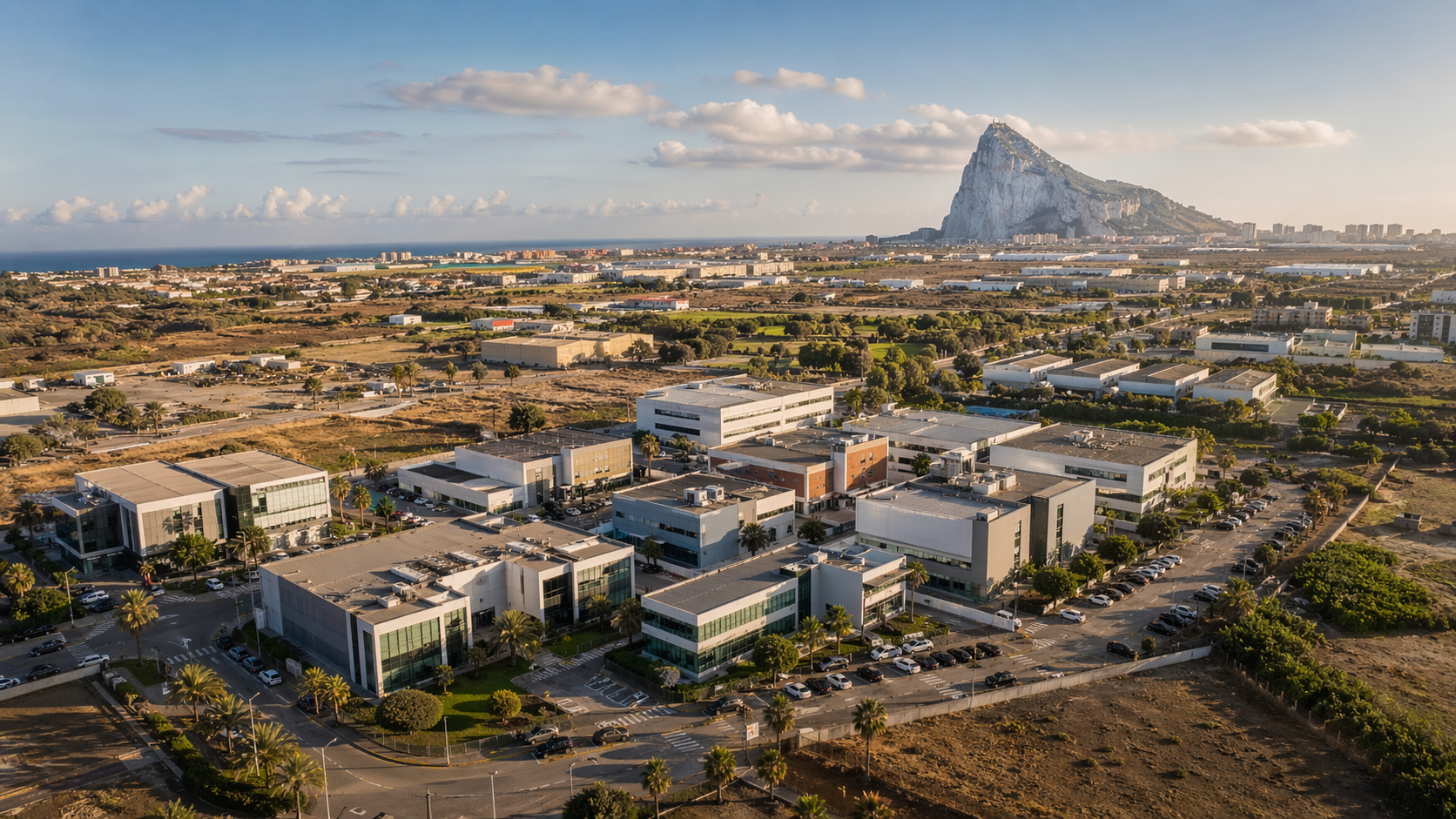
What La Linea's New Commercial Park Means for Property Buyers and Investors in 2026
Last updated: April 2026
La Linea de la Concepcion is not a town investors typically put at the top of their list. It has a complicated reputation, proximity to Gibraltar has been a source of tension for decades, and parts of the town's infrastructure have been underinvested for years. That context is changing fast, and the 15,000m² commercial park in development for 2026 is one of the clearest signals of that shift.
This article looks at what the commercial development means for property buyers and investors, which areas to watch, and how this sits alongside the broader changes coming to La Linea in the second half of 2026. This is not financial advice. Property investment carries real risks and due diligence before any purchase is essential.
Quick Summary
- A 15,000m² retail and commercial park is in development for La Linea in 2026
- Commercial investment historically precedes residential price increases in comparable Spanish towns
- The July 2026 Gibraltar-EU border treaty adds a second major tailwind for La Linea property
- Areas near the north of town and the A-7 corridor are worth monitoring for early-mover opportunities
- Risks include construction delays, treaty implementation delays, and broader Spanish market conditions
- This is not financial advice. Always conduct full due diligence before any property purchase.
What Is the Commercial Park and Why It Matters
La Linea's incoming 15,000m² commercial and retail park represents the largest single retail development the city has seen in years. At 15,000 square metres, this is a serious commercial footprint. For context, a standard large supermarket occupies roughly 2,500 to 4,000m², which means this development has capacity for a supermarket anchor tenant and a significant number of additional retail units, restaurants, service businesses, and commercial operators.
The significance for property investors is not just what shops it might bring. It is what commercial development signals about institutional confidence in a location. Large retail developments do not get built where developers expect population decline or economic contraction. The decision to build at this scale reflects an assessment that La Linea's population and spending power will grow over the coming years.
That assessment aligns directly with what the Gibraltar-EU treaty is expected to produce.
The pattern across comparable Spanish towns has been consistent. When a significant commercial anchor arrives, it typically takes 18 to 36 months for the residential property market in the surrounding area to reflect the full benefit. The property investors who move before this repricing are the ones who capture the most value. La Linea is currently at that pre-repricing stage.
The Treaty Effect: A Double Tailwind
The commercial park does not exist in isolation. La Linea is simultaneously experiencing the most significant geopolitical change in its modern history with the Gibraltar-EU border treaty scheduled for provisional implementation on July 15, 2026.
The treaty removes the hard border between Gibraltar and Spain for the first time in decades. Frontier workers who currently cross through formal checkpoints will move through under a Schengen-compatible framework. The La Verja fence is already coming down ahead of the July 15 date.
For La Linea property specifically, the treaty effects are concrete.
- Approximately 15,000 daily cross-border workers currently commute between Spain and Gibraltar. A portion of these will reassess their living situation with the barriers removed, and some will choose to upgrade their La Linea housing or buy rather than rent.
- Gibraltar workers and businesses will have easier access to La Linea's lower-cost commercial and residential property, which becomes more attractive when the friction of crossing is reduced.
- International professionals considering Gibraltar employment will be more willing to base themselves in La Linea with fast, easy cross-border access, increasing demand for quality rentals and owner-occupied housing.
The combination of a major commercial anchor development and a historic border change in the same year is genuinely unusual. Most markets get one catalyst at a time. La Linea is getting both simultaneously.
Which Areas Are Worth Watching
Not all parts of La Linea will benefit equally from these changes. Location within the town matters for investment purposes.
Northern La Linea and the A-7 Corridor
The area north of the town centre, approaching from the A-7 (N-340) road corridor, is the most likely location for large commercial developments given the available land parcels and road access requirements. Properties in this zone, which has historically been less desirable than the central and seafront areas, could benefit disproportionately from commercial anchors that bring footfall and jobs to a previously quieter part of town.
Central Residential Areas
The established residential streets of the town centre retain value as the core of the local market. Properties here benefit from walkability and proximity to existing services. Price increases in this zone tend to be steadier and more predictable than in emerging peripheral areas.
Near the Gibraltar Border
Properties close to the Gibraltar border crossing have historically been undervalued because of the friction and congestion associated with that location. As crossing conditions improve through 2026, the proximity premium of being close to Gibraltar rather than further away should strengthen. This is the part of La Linea most directly exposed to the treaty effect.
| Area | Investment Profile | Key Driver |
|---|---|---|
| Near commercial park (north/A-7) | Higher potential upside, higher uncertainty | Commercial development |
| Central residential streets | Steady, moderate growth | Overall market improvement |
| Near Gibraltar border | Direct treaty beneficiary | Border friction removal |
| Seafront / Paseo Marítimo | Premium, lifestyle appeal | Tourism + quality-of-life buyers |
How This Compares to Similar Spanish Border Town Developments
La Linea is not the first Spanish border town to experience this type of combined commercial and political catalyst. Looking at comparable situations provides useful context.
Towns along the French-Spanish border in the Basque Country and Catalonia that received commercial infrastructure improvements alongside policy changes showed residential price growth of eight to fifteen percent over three to five year periods following the initial catalyst, based on published Spanish registry data. Frontier towns in Portugal near the Spanish border showed similar patterns when cross-border friction was reduced as part of EU integration processes.
These comparisons are imperfect. La Linea has specific characteristics including its historical dependence on Gibraltar, its socioeconomic challenges, and the very local nature of the demand drivers. But the directional pattern of commercial investment followed by residential repricing is consistent across comparable examples.
Investment Considerations in Practice
For buyers considering La Linea property in 2026, the practical considerations go beyond the macro story.
- Property condition: La Linea has significant stock of older buildings that will require renovation investment. Acquisition price plus renovation cost needs to be assessed against comparable finished properties, not just the raw purchase price.
- Rental yield potential: At the time of writing, La Linea rental yields are attractive relative to the Costa del Sol coast, with one and two-bedroom properties achievable at €500 to €800 per month in a market where purchase prices are still modest compared to surrounding areas.
- Legal due diligence: Spanish property purchase requires a qualified gestor or abogado. Title searches, IBI (property tax) checks, and community charge verification are essential before any purchase, as with any Spanish property transaction.
- NIE requirement: Non-Spanish buyers need a Número de Identificación de Extranjeros (NIE) to purchase property in Spain. This should be obtained before negotiating any purchase seriously.
The Risks
No honest investment analysis ignores the downside scenarios. For La Linea property in 2026, the main risks are the following.
The Gibraltar-EU treaty could face delays beyond July 2026. Political complications on either the UK or Spanish side, or at the EU level, have already pushed the implementation date back multiple times from earlier targets. If treaty implementation is delayed again, some of the demand drivers underpinning the La Linea property case weaken or slow.
Large commercial developments in Spain routinely face construction delays and planning complications. The 15,000m² park is in development but not yet open. If it opens later than expected or at a reduced scale, the local economic impact is less immediate than the current pipeline suggests.
The broader Spanish property market has risks of its own, including ongoing mortgage rate sensitivity, regional political uncertainty in Andalusia, and the general European economic environment. La Linea property is not immune to these macro factors even if local catalysts are positive.
This article is for informational purposes only and does not constitute financial or investment advice. Property investment involves risk including the potential loss of capital. Past market patterns in comparable locations do not guarantee future performance in La Linea. Always take independent professional advice before making any property investment decision.
The Case for Watching La Linea Closely Right Now
The intersection of a new commercial anchor, the July 2026 border treaty, ongoing infrastructure improvements, and property prices that remain modest relative to nearby markets makes La Linea one of the more interesting property stories on the southern Spanish coast in 2026.
Buyers who wait for the full story to play out will pay higher prices once the market has repriced to reflect the new reality. Buyers who move early take on more uncertainty but potentially more upside. The right balance between these positions depends on individual risk appetite, available capital, and investment horizon, which is why professional advice matters more than any general market analysis.
What is clear is that La Linea is entering a materially different phase of its development history, and the combination of catalysts arriving simultaneously in 2026 is worth taking seriously as a property market story.
Is La Linea a good place to invest in property in 2026?
La Linea has genuine positive catalysts in 2026 including the commercial park development and the Gibraltar-EU border treaty. Whether it is a good investment for any individual depends on their financial position, risk tolerance, and investment horizon. This is not financial advice and professional guidance should be sought before any purchase.
How will the new commercial park affect property values in La Linea?
Commercial infrastructure typically supports residential price growth in surrounding areas over a 18 to 36 month horizon as jobs, footfall, and confidence increase. The scale of the effect in La Linea will depend on how successfully the development is delivered and how the border treaty implementation proceeds.
What are the current property prices in La Linea?
At the time of writing, La Linea property prices remain significantly below the Costa del Sol coast average. Older apartments in the town centre can be acquired from the low hundreds of thousands of euros. Newer or renovated properties command a premium. Specific pricing should be verified with local estate agents and the Spanish property registries.
What is the July 2026 Gibraltar-EU treaty and why does it matter for La Linea?
The treaty is a provisional implementation agreement that brings Gibraltar within the Schengen zone framework for border purposes. It removes the hard border between Gibraltar and Spain, making daily movement far easier for the approximately 15,000 frontier workers who currently cross formally each day. For La Linea, which sits directly on the border, this is a major structural change to the local economy and housing demand.